
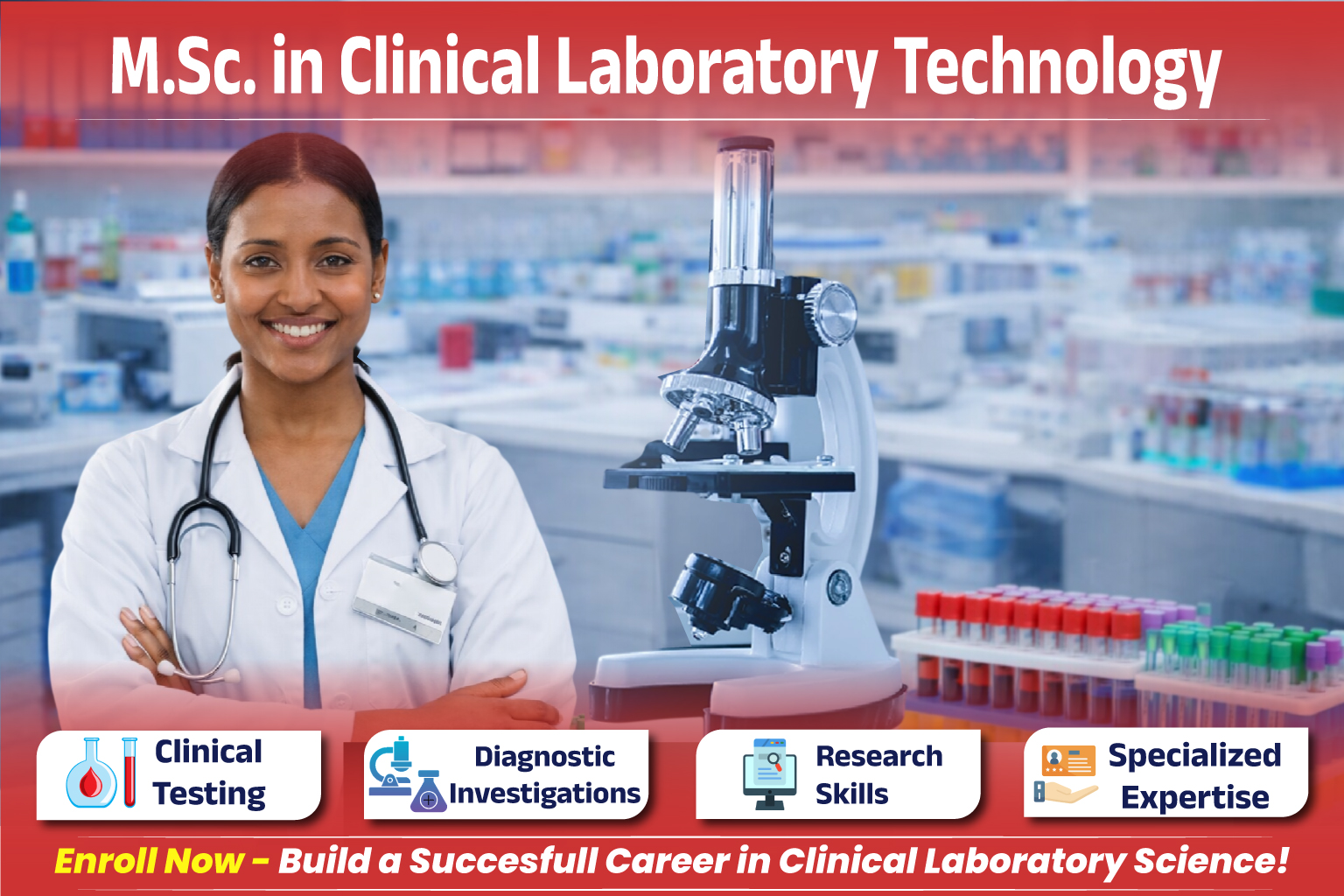
The MSc in Clinical Laboratory Technology is a comprehensive two-year postgraduate program designed to develop highly skilled professionals in advanced diagnostic laboratory sciences. This specialization equips students with in-depth knowledge, practical laboratory expertise, and analytical skills required in modern medical laboratories.
Clinical Laboratory Technologists play a crucial role in the healthcare system by performing sophisticated laboratory investigations that assist physicians in accurate diagnosis, treatment planning, and disease monitoring
2 Years (Full-Time Postgraduate Program)
A Clinical Laboratory Technologist performs laboratory tests across various clinical areas such as:
Under the supervision of a pathologist, they investigate the absence, presence, extent, and causes of diseases by carefully analyzing biological samples.
They examine and interpret patient samples including:
Accurate laboratory diagnosis is the backbone of modern medicine. Nearly every medical decision depends on laboratory test results. This program ensures that students:
Develop strong analytical and diagnostic abilities
Understand disease mechanisms at a laboratory level
Maintain ethical and quality standards in medical testing
Contribute significantly to patient safety and healthcare excellence
The demand for qualified Clinical Laboratory Technologists is rapidly growing in both public and private healthcare sectors.
Career Opportunities Include:
With experience, professionals can advance into supervisory, administrative, or research roles.
